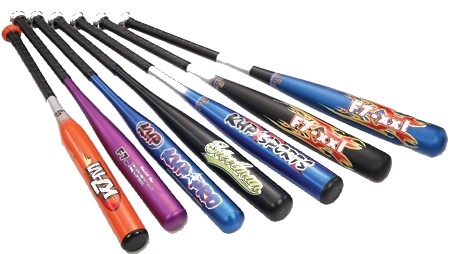
Baseball Bats
Get the right sized bat for YOU
Bat Sizes
| Your height (inches) | ||||||||||
| Your weight (pounds) | 36-40 | 41-44 | 45-48 | 49-52 | 53-56 | 57-60 | 61-64 | 65-68 | 69-72 | 73+ |
| Bat length | ||||||||||
| less than 60 | 26" | 27" | 28" | 29" | 29" | |||||
| 61-70 | 27" | 27" | 28" | 29" | 30" | 30" | ||||
| 71-80 | 28" | 28" | 29" | 30" | 30" | 31" | ||||
| 81-90 | 28" | 29" | 29" | 30" | 30" | 31" | 32" | |||
| 91-100 | 28" | 29" | 30" | 30" | 31" | 31" | 32" | |||
| 101-110 | 29" | 29" | 30" | 30" | 31" | 31" | 32" | |||
| 111-120 | 29" | 29" | 30" | 30" | 31" | 31" | 32" | |||
| 121-130 | 29" | 29" | 30" | 30" | 31" | 32" | 33" | 33" | ||
| 131-140 | 29" | 30" | 30" | 31" | 31" | 32" | 33" | 33" | ||
| 141-150 | 30" | 30" | 31" | 31" | 32" | 33" | 33" | |||
| 151-160 | 30" | 31" | 31" | 32" | 32" | 33" | 33" | 33" | ||
| 161-170 | 31" | 31" | 32" | 32" | 33" | 33" | 34" | |||
| 171-180 | 32" | 33" | 33" | 34" | 34" | |||||
| 180+ | 33" | 33" | 34" | 34" | ||||||
Note: In general, bigger, stronger players usually prefer a heavier bat since they reap benefits from both the heft and swing power. Smaller and younger players should use a lighter bat to generate a quicker swing and provide better control.
|
|
Weight Minimum |
Weight Maximum |
Length Minimum |
Length Maximum |
|
|
6-7 |
17 Ounces |
19 Ounces |
24 Inches |
28 Inches |
2 ¼ |
|
8 |
19 Ounces |
21 Ounces |
27 Inches |
30 Inches |
2 ¼ |
|
9 |
20 Ounces |
23 Ounces |
28 Inches |
30 Inches |
2 ¼ |
|
10 |
20 Ounces |
23 Ounces |
28 Inches |
31 Inches |
2 ¼ |
|
11 |
21 Ounces |
24 Ounces |
29 Inches |
31 Inches |
2 ¼ to 2 5/8 |
|
12 |
23 Ounces |
25 Ounces |
30 Inches |
33 Inches |
2 ¼ to 2 ¾ |
|
13-14 |
23 Ounces |
28 Ounces |
30 Inches |
33 Inches |
2 ¼ to 2 ¾ |
|
15 + |
24 Ounces |
30 Ounces |
30 Inches |
34 Inches |
2 ¾ |
Bat Taper: The bat's taper is the diameter of the bat's handle. A bigger bat taper can reduce the sting that occurs when the ball isn't hit on the sweet spot but it also increases the overall weight of the bat. Standard bats are tapered 31/32 of a inch.
While a properly sized bat is important, learning how to hold the bat, get ready and swing properly are all priorities and should be practised --- otherwise the bat only "looks good".

















.jpg)
.png)



.jpg)




.jpg)